
Many people know La Catrina, but do you know where she comes from?
The story of the now-famous Catrina dates back to the early 20th century, when Mexican engraver, illustrator, and cartoonist José Guadalupe Posada created a character known as “La Calavera Garbancera.” She was originally conceived as a way to criticize people who were referred to as “garbanceros.”
The term “garbanceros” was used to describe merchants who had stopped selling corn and started selling chickpeas instead, and who sought to adopt European customs, trying to pass themselves off as European while rejecting their Indigenous roots. Originally, La Catrina did not wear the elegant outfit we associate with her today. José Guadalupe Posada drew her wearing only a hat, with no clothing. This was interpreted as a criticism of the poverty many Mexicans lived in, as well as of those who wanted to appear as though they enjoyed a European lifestyle.
Through his illustrations of skeletons, Posada also depicted the joys and struggles of Mexican society during the Porfiriato, showing that social class made no difference in the end. When people died, it did not matter how much wealth they had accumulated; everything they owned stayed behind in this world.
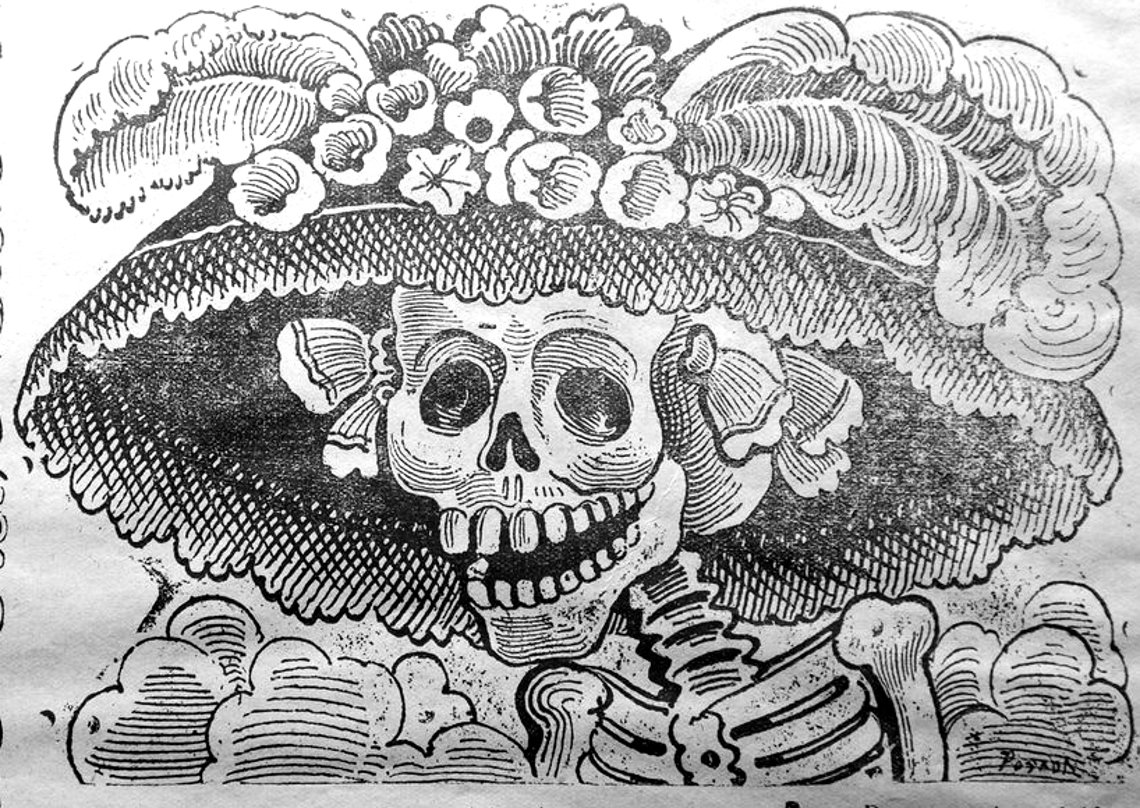
La Calavera Garbancera | Source: MexBest
It wasn't until 1947 that muralist Diego Rivera included her in his mural “Sueño de una tarde dominical en la Alameda Central” (Dream of a Sunday Afternoon in the Alameda Central). However, he portrayed her in an elegant outfit: a long dress, a feather boa around her neck, and a hat adorned with flowers.
In the late 19th and early 20th centuries, the term “Catrín” was used to describe upper-class men who dressed well and presented themselves with an air of elegance. They were often accompanied by women with similar characteristics, who came to be known as “Catrinas.” During this period, national newspapers published satirical cartoons poking fun at the lifestyles of the privileged and those who tried to imitate them, often using the figures of the Catrín and the Catrina.
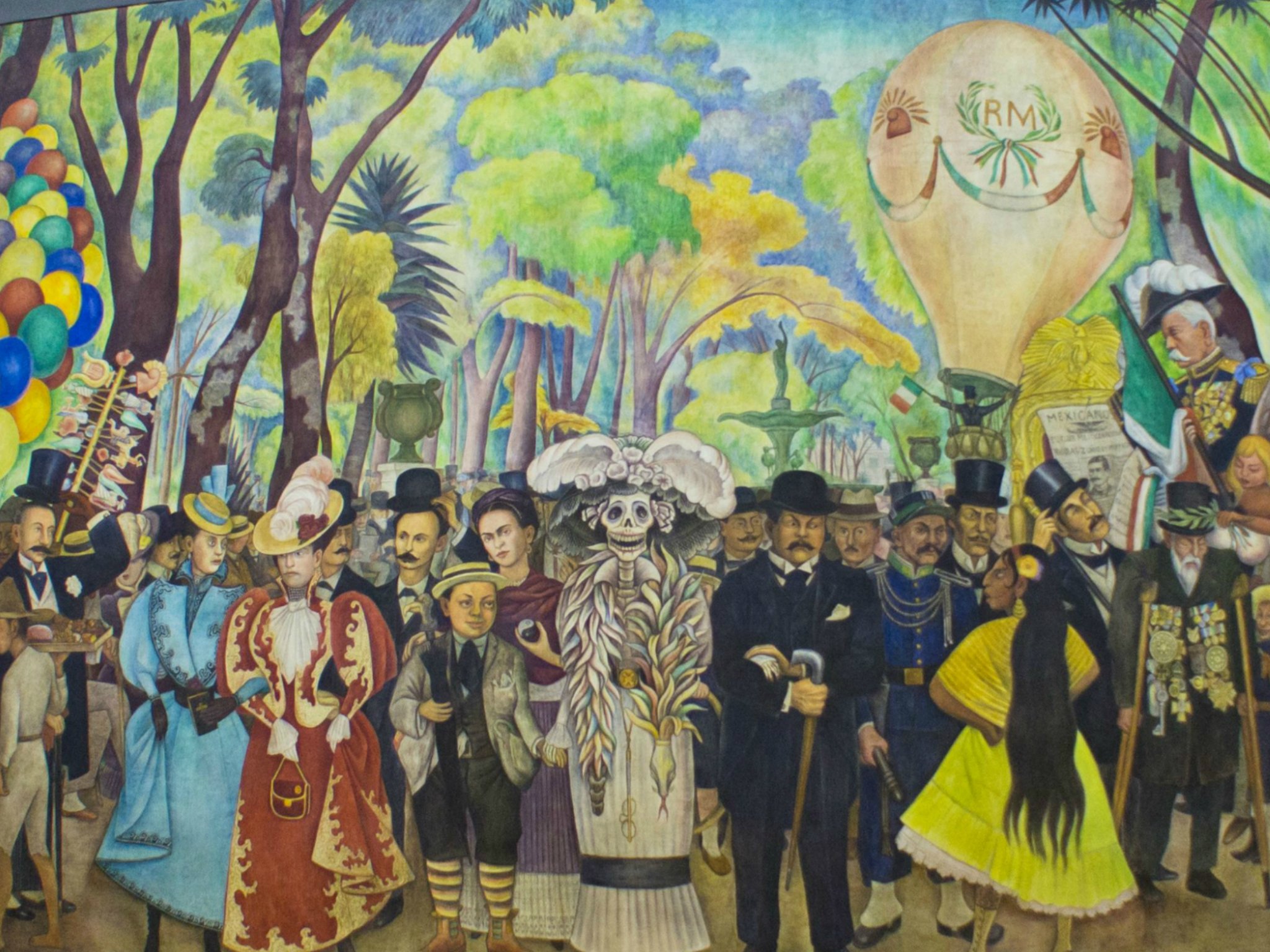
Diego Rivera’s mural “Sueño de una tarde dominical en la Alameda Central” | Source: Time Out México
La Catrina Today
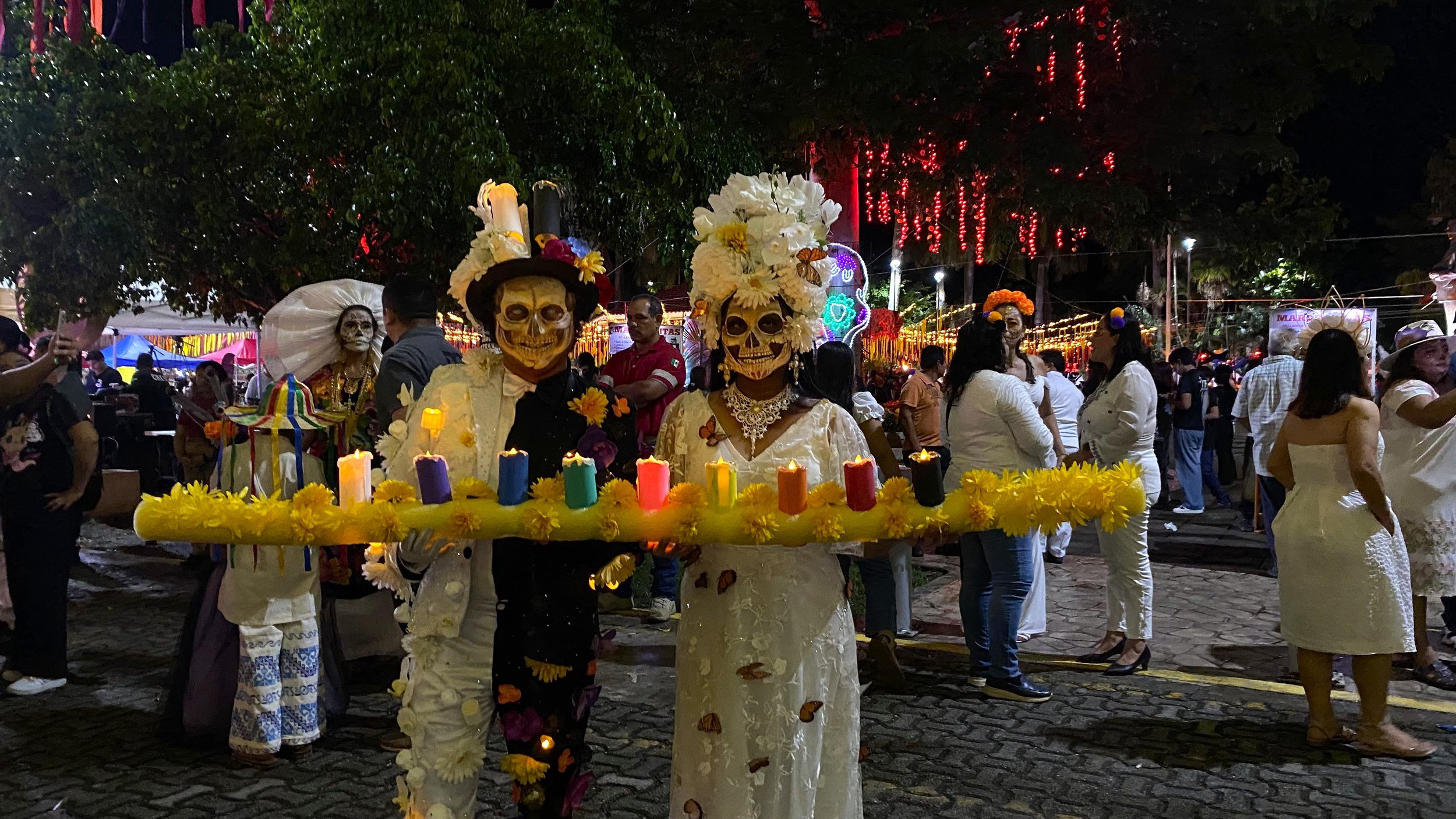
Today, La Catrina is one of the most iconic symbols of Día de Muertos in Mexico. Every year, during the Día de Muertos celebrations, people take to the streets in cities across the country to participate in parades dressed as Catrinas and Catrines. Their looks often feature elaborate makeup and intricate outfits, honoring what death represents in our culture.
Día de Muertos is a colorful celebration in which we honor the lives of those who are no longer with us through our altars. La Catrina does not simply represent death; she also honors our time on Earth and can be seen as a tribute to the beauty of life. At the same time, she reminds us that no matter what we own in life or where we come from, one day we will leave this world, and we will take nothing with us.
To learn more about Na’atik’s English language program for local and Indigenous students in Felipe Carrillo Puerto, visit our Impact Page. We are only able to provide this much needed program thanks to the support of generous donors and the funds raised from our award winning Maya and Spanish Immersion Program. If you would like to support our mission please consider donating today or take a look at our immersion programs and online class packages.