
Every year, as October comes to an end, pumpkins, colorful altars, candles, and offerings appear across different parts of the world. Halloween, Día de Muertos, and Janal Pixán may share the same season and some familiar symbols, but each tradition tells a different story about death, memory, and the connection between the living and those who have passed away.
Understanding their differences is also a way to appreciate the cultures that keep them alive.
Halloween: From Ancient Traditions to a Night of Costumes
Halloween is celebrated on October 31 and has roots in the ancient Celtic festival of Samhain, observed in parts of what are now Ireland and the United Kingdom. Samhain marked the end of the harvest season and the beginning of winter, a time when people believed the boundary between the living and the dead became less distinct.
Over the centuries, these customs interacted with Christian observances, including All Saints’ Day on November 1 and All Souls’ Day on November 2. The evening before All Saints’ Day became known as All Hallows’ Eve, eventually shortened to Halloween.
When Irish and other European immigrants brought their traditions to North America, Halloween continued to evolve. By the twentieth century, costumes, carved pumpkins, neighborhood celebrations, and trick-or-treating had become familiar features of the holiday.
Today, Halloween is largely a secular celebration centered on costumes, spooky decorations, candy, and entertainment. Although its historical roots include beliefs about spirits and the dead, many people celebrate it simply as a fun autumn tradition.

Día de Muertos: Honoring Loved Ones Through Memory and Food
In Mexico, Día de Muertos is celebrated primarily on November 1 and 2, although the dates and customs vary between communities.
Its history is more complex than a single origin story. The celebration developed through centuries of interaction between Indigenous traditions surrounding death and ancestral remembrance and Catholic observances brought by Spanish colonizers. Rather than being an unchanged pre-Hispanic ritual, the Día de Muertos we know today reflects this long cultural evolution.
For many Mexican families, these days are an opportunity to welcome the memory of deceased loved ones and maintain a connection with them. Families prepare ofrendas, or altars, with photographs, candles, flowers, favorite foods, drinks, and personal belongings. Marigolds, known as cempasúchil, are especially recognizable, while pan de muerto, sugar skulls, and papel picado are familiar symbols of the season.
In some communities, families visit cemeteries to clean and decorate graves, share food, pray, and spend time remembering those who have passed away. Other communities observe the occasion through home altars, religious services, public celebrations, or a combination of these practices.
Today, Día de Muertos is also celebrated through parades, art, festivals, and cultural events in Mexico and around the world. Its growing international popularity has introduced more people to the tradition, although its meaning remains deeply connected to family, community, and remembrance.

Janal Pixán: The Maya Tradition of Feeding the Souls
In the Maya region of the Yucatán Peninsula, including Quintana Roo, Yucatán, and Campeche, many Maya families observe a tradition known as Janal Pixán, also written Hanal Pixán. In the Maya language, the name is commonly translated as “food for the souls.”
Although it takes place around the same time as Día de Muertos, Janal Pixán has its own cultural and spiritual significance, rooted in Maya understandings of life, death, family, and the natural world.
Food is at the heart of the celebration. Families prepare offerings for deceased relatives, often placing them on tables or altars alongside candles, flowers, photographs, and other meaningful objects. Traditional dishes may include mucbipollo, also called pib, a large tamal traditionally cooked underground, as well as other regional foods and drinks prepared according to family and community customs.
In many households, the observance extends across several days. Customs may include remembering children who have passed away, honoring deceased adults, and gathering family members to prepare food and maintain traditions passed down through generations. Practices differ from one community to another, and not every Maya family observes Janal Pixán in exactly the same way.
Today, Janal Pixán remains a living tradition in the Maya region. Community altars, food festivals, cultural workshops, and family gatherings help preserve it, while also introducing younger generations and visitors to Maya language and heritage.
For communities in Quintana Roo, Janal Pixán is more than a seasonal celebration. It is an opportunity to experience how cultural identity, family relationships, and traditional knowledge continue to shape everyday life.
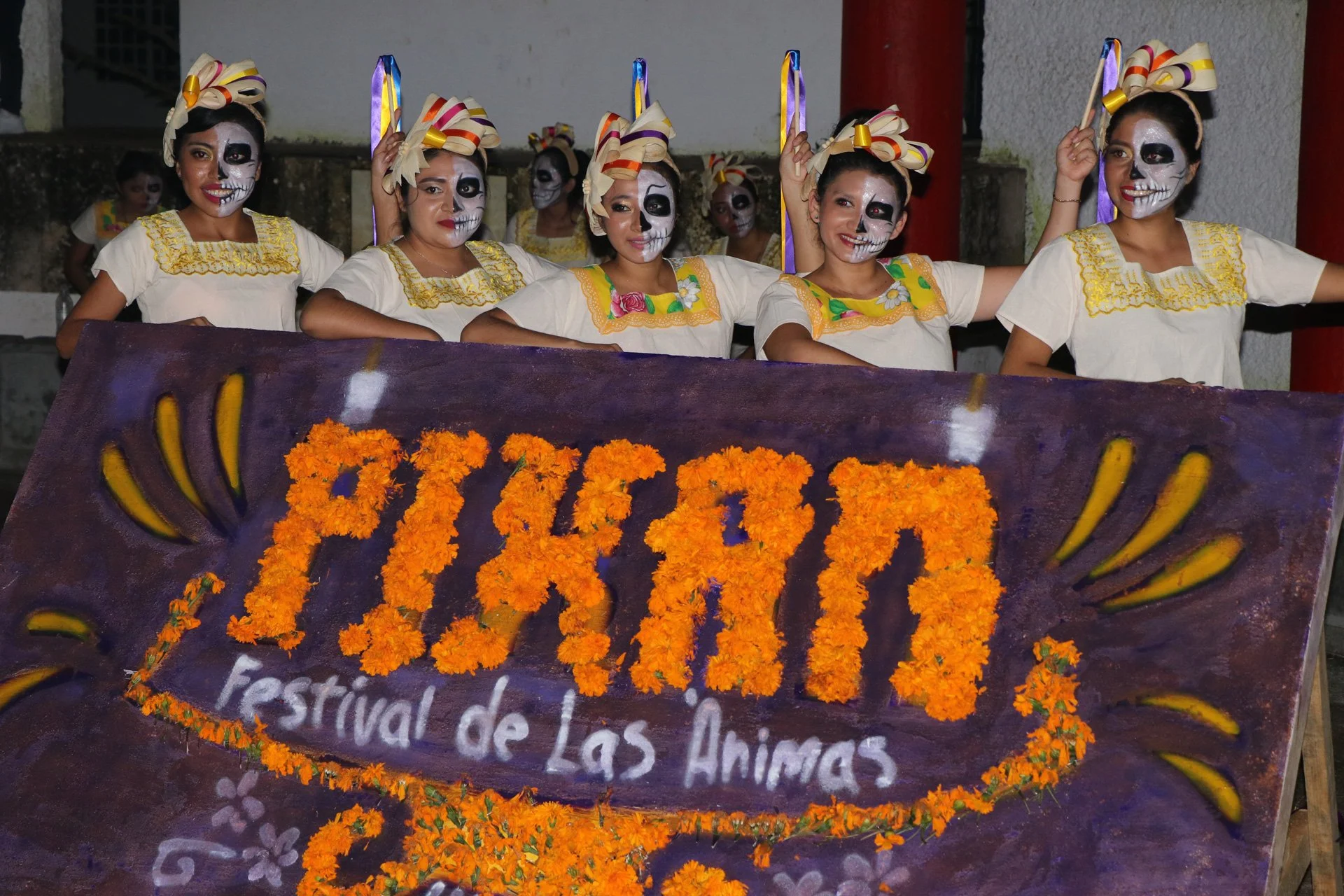
Why Are Día de Muertos and Janal Pixán Similar but Not the Same?
The two traditions share important similarities. Both honor deceased loved ones, involve preparing food offerings, and bring families together to remember those who came before them. Both also reflect the ways Indigenous communities have maintained and adapted their traditions over generations.
However, Janal Pixán is not simply another name for Día de Muertos. Día de Muertos is a broad Mexican celebration expressed through many regional traditions, while Janal Pixán refers specifically to a Maya tradition with its own language, cultural context, foods, and practices.
Their offerings can look similar, but the meaning of individual elements, the dishes prepared, and the ways families observe the occasion may differ. For example, while cempasúchil flowers and pan de muerto are widely associated with Día de Muertos, mucbipollo is particularly connected to Janal Pixán in the Maya region.
It is also important to remember that neither tradition is uniform. Mexico is home to many Indigenous peoples and regional cultures, each with its own ways of honoring the dead. Treating every Mexican celebration as identical overlooks the cultural diversity that makes these traditions so meaningful.
Three Celebrations, One Season of Reflection
Halloween, Día de Muertos, and Janal Pixán demonstrate how different cultures give meaning to the relationship between life and death.
One has evolved into a popular celebration of costumes and spooky fun. Another brings Mexican families together through altars, food, and remembrance. The third preserves a distinct Maya tradition in which feeding and honoring the souls of the departed strengthens family and community ties.
Learning about these celebrations means looking beyond the decorations to understand the histories, beliefs, and people behind them.
To learn more about Na’atik’s English language program for local and Indigenous students in Felipe Carrillo Puerto, visit our Impact Page. We are only able to provide this much needed program thanks to the support of generous donors and the funds raised from our award winning Maya and Spanish Immersion Program. If you would like to support our mission please consider donating today or take a look at our immersion programs and online class packages.