
Chewing gum, or chicle, has come a long way. It began as a natural resin obtained from the chicozapote tree, or xicotzápotl, also known as “the chewing gum tree”, and eventually became the commercial chewing gum we know today. The chicozapote is a tree that can reach approximately 40 meters in height and can be found in the Yucatán Peninsula, Guatemala, and Belize.
Since pre-Hispanic times, people have made use of this tree in various ways: its fruit for its flavor, its wood for its quality and attractive color, and its sap, which is extracted to produce chewing gum.
Production Process
To make chewing gum, the first step is to extract the sap produced by the chicozapote tree, called tzictli or chicle, which is the raw material used in its production. In order to extract the sap, the trees must first be located and selected within the jungle, since several factors must be considered before they can be used. One of these factors is that the tree must have rested for a period of five to seven years before it can be tapped again.
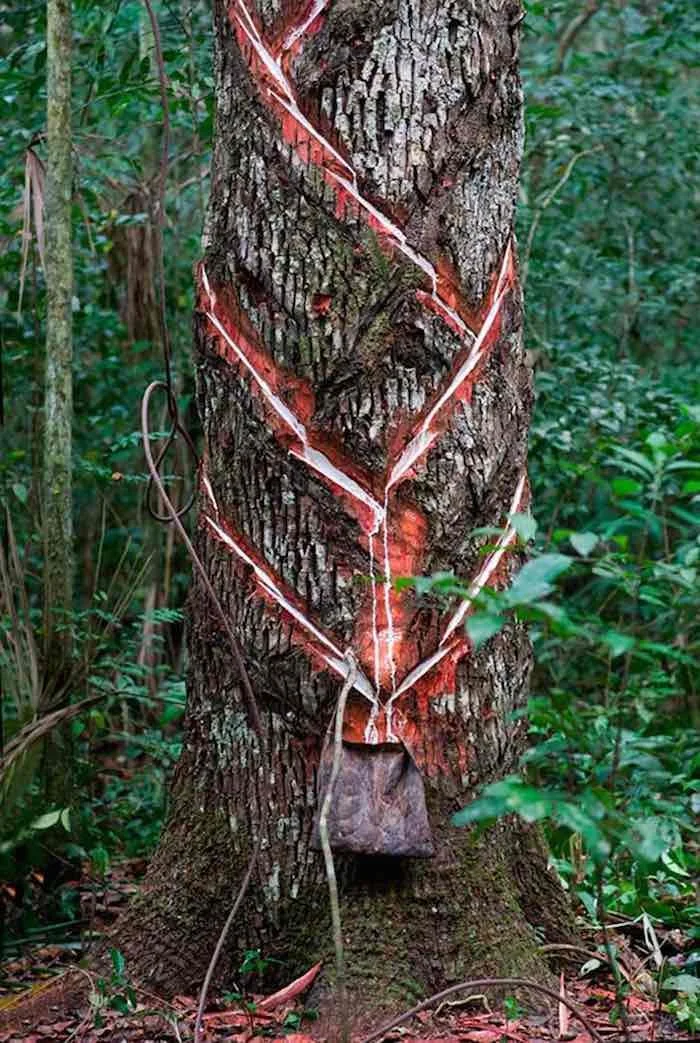
Photo by EcoInventos
To begin the harvesting process, the branches at the base of the tree are cleared, and a V-shaped cut is made at the lower part of the trunk. This allows the resin to begin flowing and to be collected in a canvas bag placed beneath the initial cut. Afterwards, the chicleros tie a rope around the trunk and their bodies to prevent falling, and then make zigzag cuts in the bark of the tree with a machete so that the sap continues to flow.
Once the sap has been fully collected, it is boiled in a large pot and stirred constantly until it reaches a sticky, gum-like consistency. It is then poured into wooden molds to cool, after which it is ready for use.
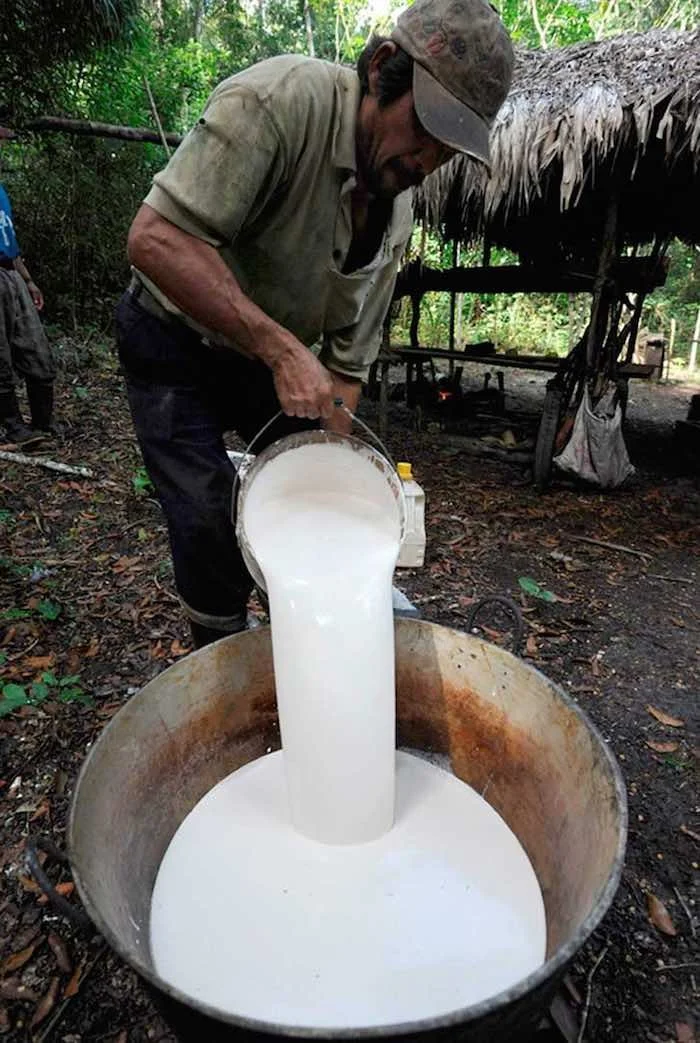
Photo by EcoInventos
It is said that the worldwide rise of chewing gum is due to a meeting between former Mexican president Antonio López de Santa Anna and Thomas Adams. Upon realizing how innovative chewing gum could be in other parts of the world, Adams decided to begin exporting it, thus initiating the mass production and commercialization of chewing gum worldwide.
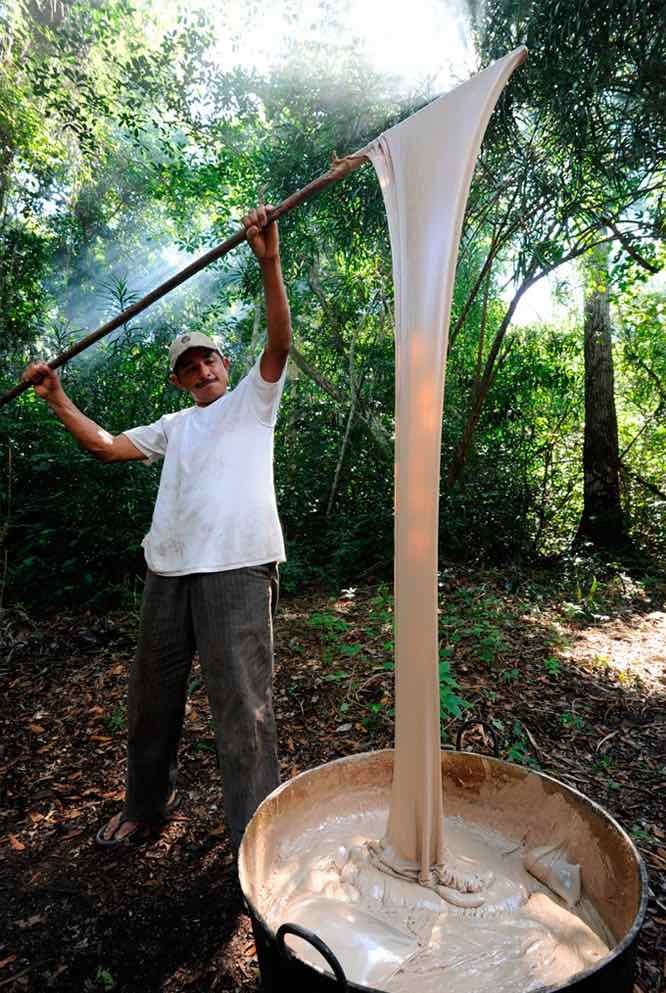
Photo by EcoInventos
To learn more about Na’atik’s English language program for local and Indigenous students in Felipe Carrillo Puerto, visit our Impact Page. We are only able to provide this much needed program thanks to the support of generous donors and the funds raised from our award winning Maya and Spanish Immersion Program. If you would like to support our mission please consider donating today or take a look at our immersion programs and online class packages.