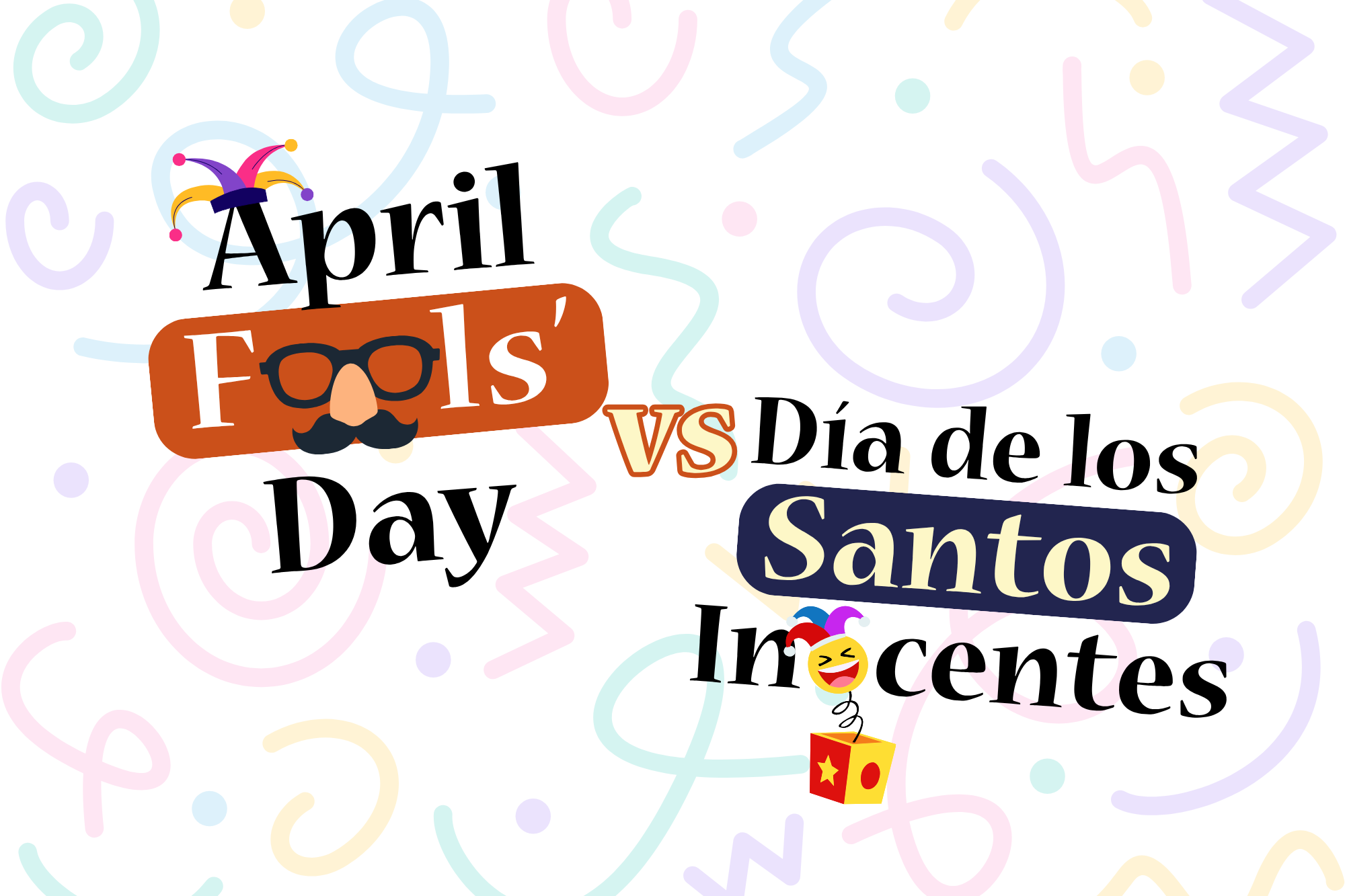
April Fools’ Day vs Día de los Santos Inocentes
April 1st, better known as April Fools’ Day, is one of the most popular celebrations in the United States. It’s a day when people play small pranks on their friends and family.
But what’s the story behind this day? One widely known version says that it originated in 1582, when Pope Gregory XIII introduced the Gregorian calendar, replacing the Julian calendar and establishing a new system. With this change, King Charles IX of France moved the celebration of the New Year from April 1st to January 1st.
However, this sudden change caused confusion among people, and many continued celebrating the New Year in April because they were unaware of (or forgot) the new date. As a result, these people were labeled “April fools,” and others would play tricks on them, such as giving fake gifts or inviting them to parties that didn’t actually exist.
On the other hand, Día de los Santos Inocentes is celebrated in many Spanish-speaking countries on December 28th. Similar to April Fools’ Day, it’s a time when people play harmless pranks on their friends and family. However, this day has its origins in a biblical event: when Jesus was born, King Herod ordered the killing of all children under the age of two in an attempt to eliminate the “Messiah” and prevent his power from being challenged. Since King Herod did not know Jesus personally, this led to the mass killing of innocent children, which is why the day is called Día de los Santos Inocentes or “Holy Innocents’ Day.”
Nowadays, it’s common for people to play harmless pranks on their friends and family on December 28th. After someone falls for the joke, the person who made it often says, “inocente palomita, te dejaste engañar” (innocent little dove, you let yourself be fooled).
In conclusion, although both dates have different origins, they share the common trait of being days when playing pranks is especially popular. Even brands often join in by posting humorous content to engage with their audience, connect with their community, and showcase their creativity.
To learn more about Na’atik’s English language program for local and Indigenous students in Felipe Carrillo Puerto, visit our Impact Page. We are only able to provide this much needed program thanks to the support of generous donors and the funds raised from our award winning Maya and Spanish Immersion Program. If you would like to support our mission please consider donating today or take a look at our immersion programs and online class packages.