
Josefa Ortiz de Domínguez: Her role in Mexico’s Independence
Josefa Ortiz de Domínguez, known as La Corregidora, represents the active participation of women in the Independence movement. She was born on September 8th, 1768, in the city of Valladolid, now known as Morelia, Michoacán. She was the daughter of José Ortiz, a captain of a military regiment, and Manuela Girón, who came from a noble Spanish family.
After losing her parents at an early age, she went to live with one of her aunts and moved to Mexico City, where she studied at the Colegio de San Ignacio de Loyola, now known as the Colegio de Vizcaínas. However, after some time, Josefa left school and married Miguel Domínguez, who was later appointed Corregidor of Querétaro.
She played an important role in Mexico’s Independence, as literary gatherings were held in her home, which served as a cover for what was actually taking place: meetings for the Conspiracy of Querétaro. Several people who shared the idea of gaining independence from Spain participated in these meetings, among them Miguel Hidalgo y Costilla (who initially led the movement), Ignacio Allende, Juan Aldama, and La Corregidora’s husband, Miguel Domínguez.
The beginning of the Independence movement was planned for October 1st, 1810. However, when the conspiracy was discovered after someone betrayed them, many of those involved were arrested by the authorities. Meanwhile, Josefa Ortiz de Domínguez was locked in her room by her husband to protect her, but she managed to send a warning about what was happening (either by striking the floor with her shoe or tapping the wall).
As a result, Miguel Hidalgo decided to move the uprising forward. In the early morning of September 16th, 1810, he delivered the Grito de Dolores, thus marking the beginning of the armed movement. On that same date, Josefa Ortiz and her husband were arrested for their involvement in the conspiracy. She was imprisoned in the Convent of Santa Clara in Querétaro, and her husband in the Convent of the Cross.
Some time later, Josefa Ortiz was sent to the Convent of Santa Teresa in Mexico City, while her husband was released and removed from office. Finally, she remained imprisoned in the Convent of Santa Catalina de Sena until June 1817, when she was released. However, she never abandoned the cause, as she continued to support the independence movement for the rest of her life.
On March 2nd, 1829, Josefa Ortiz de Domínguez died in Mexico City. Her remains were buried in the Convent of Santa Catalina, but later they were transferred to Querétaro so that she could rest alongside her husband.
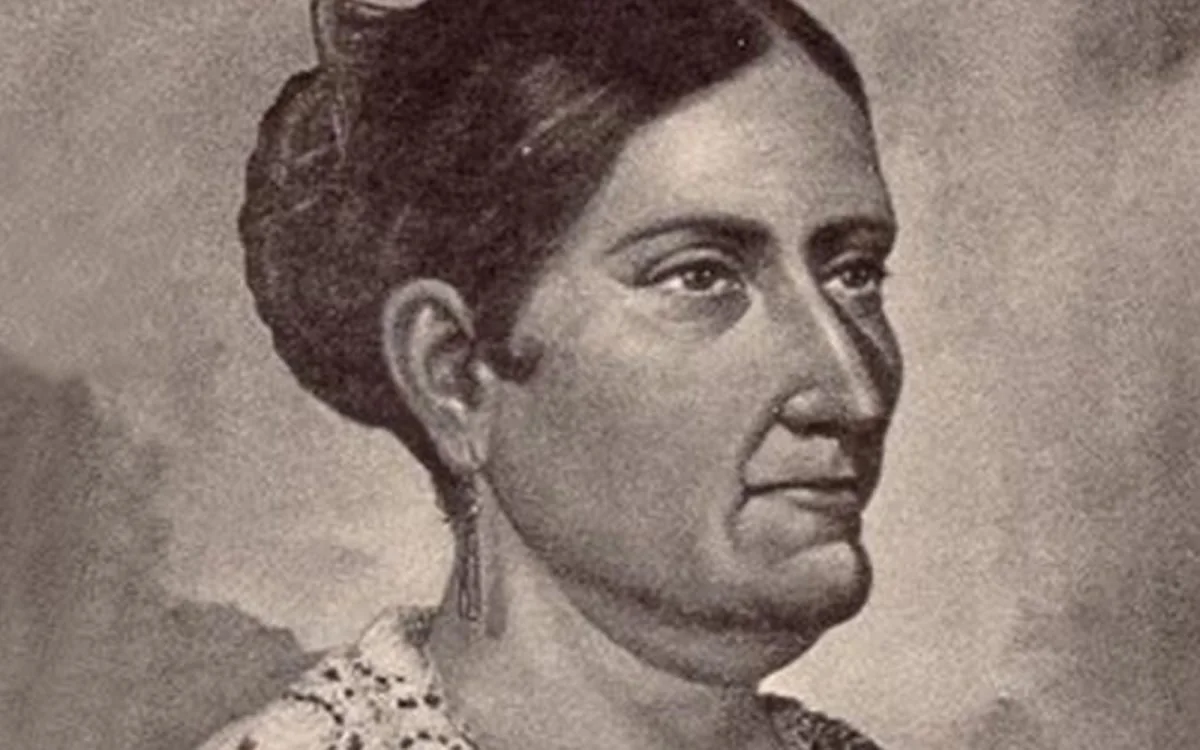
Photo by México Desconocido
To learn more about Na’atik’s English language program for local and Indigenous students in Felipe Carrillo Puerto, visit our Impact Page. We are only able to provide this much needed program thanks to the support of generous donors and the funds raised from our award winning Maya and Spanish Immersion Program. If you would like to support our mission please consider donating today or take a look at our immersion programs and online class packages.